The ROI of sales AI: a CFO-ready calculation framework
By The Damulo Team on 2024-07-05
When considering any new technology, especially AI, the first question from any CFO or board member is: "What's the ROI?" For sales automation, the answer isn't a vague promise of "efficiency"—it's a hard, quantifiable return that makes it one of the few investments with a payback period measured in months, not years. This isn't about incremental gains; it's about transformative efficiency that directly impacts your bottom line. Let's break down how to calculate it.
Part 1: Quantifying the cost savings (reclaimed time)
The most direct and easily measured return is in reclaimed hours. This is the "hard cost" savings. Start by conducting a time audit of your sales team's week. How many hours do they spend on low-value, automatable tasks?
- Prospecting and list building? (Industry Avg: 4 hours/week)
- Manually entering data into the CRM? (Industry Avg: 5 hours/week)
- Researching prospects before a call? (Industry Avg: 2 hours/week)
- Internal administrative tasks and reporting? (Industry Avg: 3 hours/week)
For many teams, this easily amounts to 10-14 hours per week per rep. Let's be conservative and say AI automates just 5 hours of this work. This is a key part of our strategy to scale sales without scaling headcount.
Calculation:
(5 hours/week) x (Number of Reps) x (Average Rep Blended Hourly Cost) x (52 weeks) = Annual Hard-Cost Savings
For a team of 10 reps with a blended hourly cost of $50 (salary + benefits + overhead), that's $130,000 in direct savings per year. This number alone is often enough to justify the investment several times over. Our interactive ROI calculator can help you visualize this with your own numbers.
Part 2: Measuring the revenue gains (increased productivity)
Reclaimed time is only half the story. The real value—the "soft-cost" savings and revenue generation—comes from what your team *does* with that extra time. When reps can focus on high-value activities, they close more deals.
Consider the compounding impact of:
- Higher Lead Quality: AI-qualified leads convert at a higher rate. A 10% increase in lead-to-opportunity conversion rate can have a massive impact on revenue with the same amount of inbound leads.
- More Selling Time: If each rep gets 5 extra hours a week for selling, that's equivalent to hiring an extra rep for every 8 reps on your team, at no additional salary cost. This directly leads to a 15-20% increase in meetings booked and pipeline generated.
- Shorter Sales Cycles: With better data and personalization, reps build rapport faster and address needs more directly, shortening the time from first contact to close by an average of 10-15%.
Calculation:
(Additional Deals Closed/Rep/Month) x (Number of Reps) x (Average Deal Size) x (12 months) = Potential Annual Revenue Increase
This revenue increase often dwarfs the hard-cost savings, demonstrating that AI is not just a cost-cutter, but a powerful growth engine, a key component of the modern sales engine.
Part 3: The intangible returns (enterprise value)
Beyond the direct financial numbers, AI automation brings other powerful benefits that increase the overall value and resilience of your business:
- Improved Sales Rep Morale & Retention: Reps who focus on selling are happier and more motivated than those stuck with data entry. This reduces burnout and expensive turnover, which can cost 1.5-2x an employee's salary to replace.
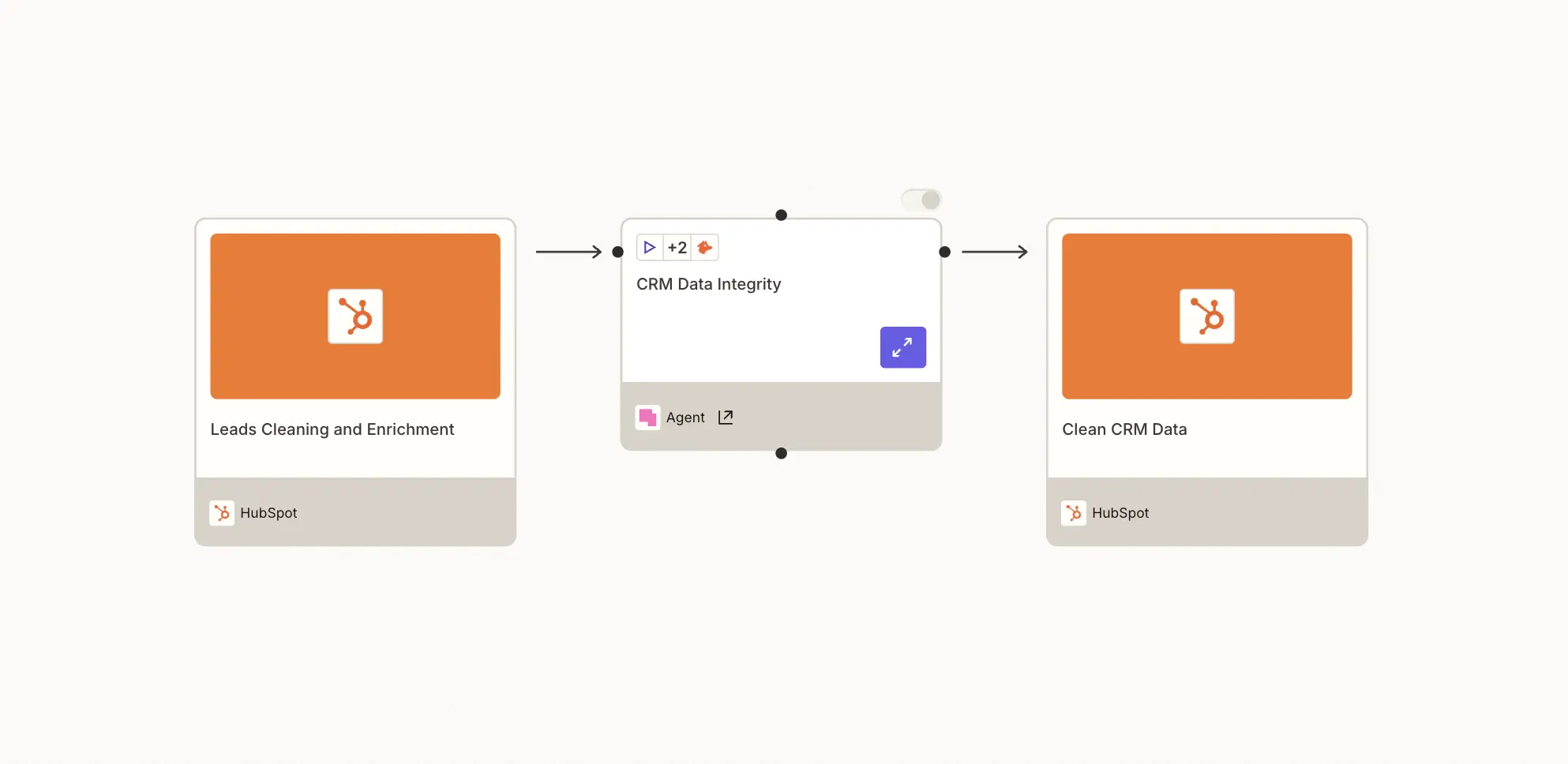
- Enhanced Data Accuracy: Automated CRM updates lead to cleaner data, which means better forecasting and business intelligence. We dive deep into this in our article on CRM data integrity.
- Scalability: You can scale your sales operations without linearly scaling your headcount. This operational leverage is a key metric for SaaS company valuations. A business that can grow revenue by 30% while only increasing sales headcount by 10% is fundamentally more valuable.
Investing in a sales AI blueprint isn't just about cutting costs for the next quarter; it's about building a more resilient, efficient, and high-performing sales organization that is more valuable and ready for the future.
Calculate your potential ROI in 60 seconds
Don't guess at the value of AI. Use our free ROI Calculator to generate a personalized report showing your potential savings and revenue gains.
Calculate your ROI now →