AI agents vs. traditional automation: what's the difference?
By The Damulo Team on 2024-04-24
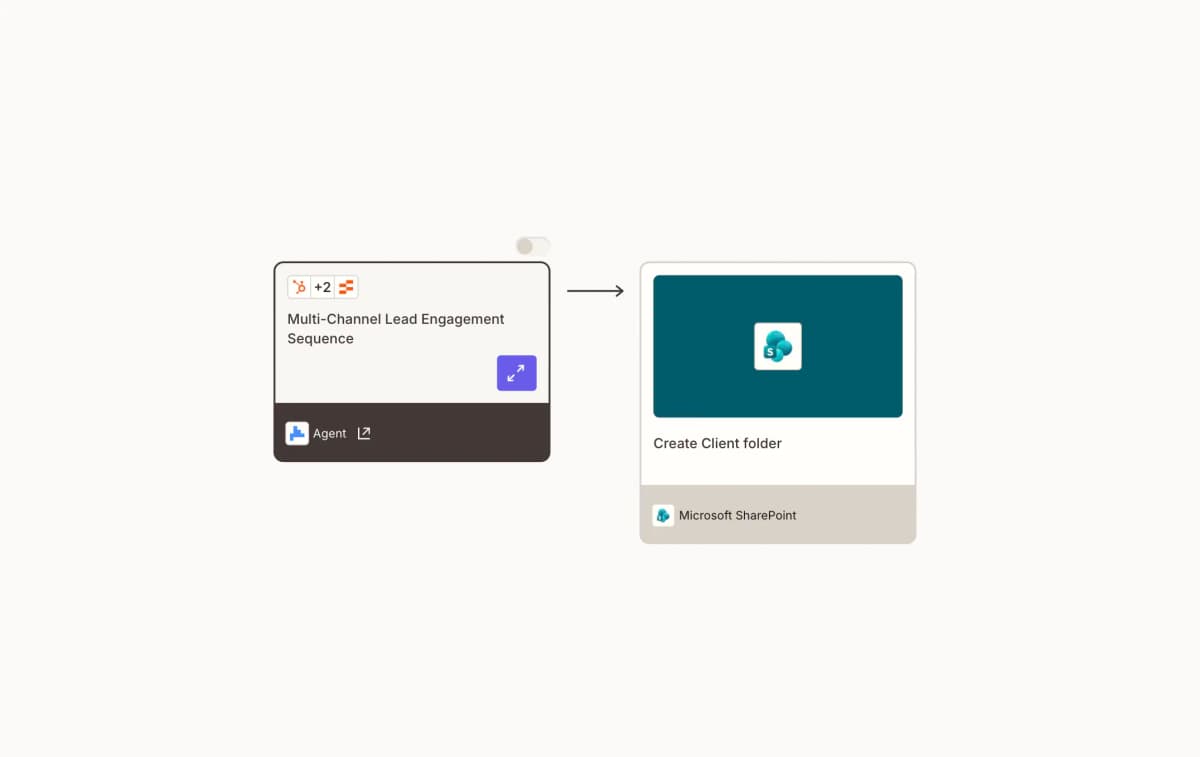
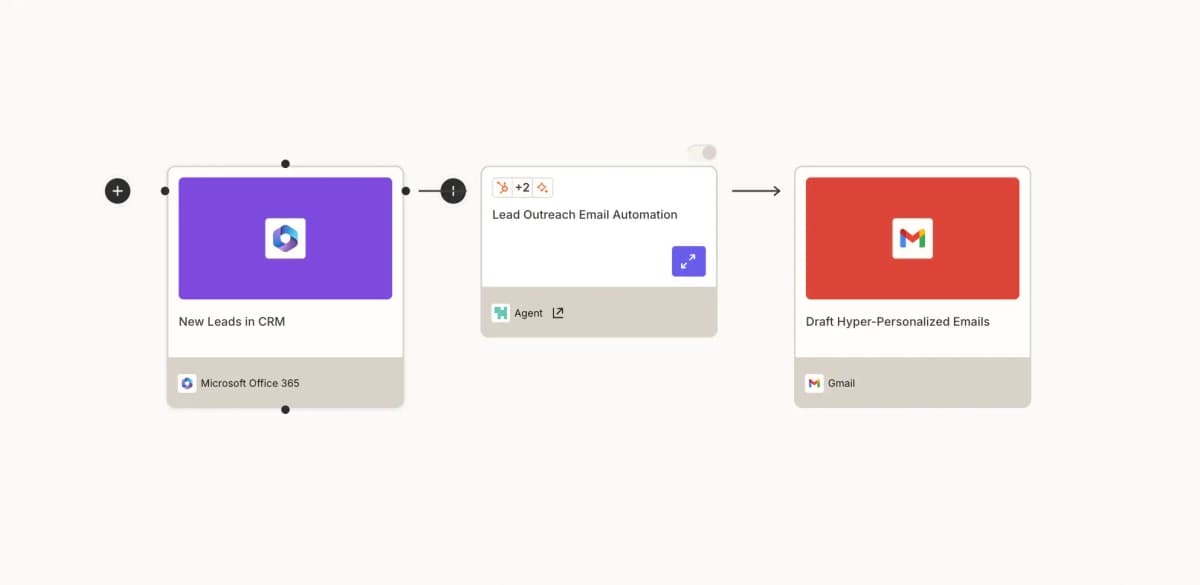
"AI agent" is the new buzzword, but many savvy sales and operations leaders are left wondering: "Isn't this just the same as the automation I'm already using with tools like Zapier?" It's a fair and important question. While traditional automation and AI agents both aim to increase efficiency, they are fundamentally different in their capabilities and intelligence. Understanding this difference is key to grasping the new level of leverage available to your team.
Traditional automation: The "if-this-then-that" robot
Traditional automation, like that offered by tools like Zapier or IFTTT, is based on rigid, predefined rules. It follows a simple logic: If a specific, structured event happens (the trigger), then perform a specific, predefined action (the action). For example: IF a new form is submitted on a webpage, THEN create a new contact in the CRM.
This is incredibly useful for connecting systems and automating simple, linear workflows. However, it's also very brittle and lacks intelligence. If the trigger changes slightly (e.g., the form field names are different), or if any judgment or interpretation is required, the automation breaks. Think of it as a simple robot on an assembly line. It can perform one specific task over and over again perfectly, but it has no ability to adapt, learn, or make decisions if something unexpected happens. This is a far cry from the BDR of the future.
AI agents: The "understand-reason-act" partner
An AI agent, on the other hand, is a more sophisticated system that can operate autonomously to achieve a goal. Instead of a rigid "if-this-then-that" rule, an AI agent operates on a more advanced loop of "understand, reason, act."
- Understand: The agent can interpret unstructured data and ambiguous goals. For example, you can give it a natural language instruction like, "Find me some new potential leads in the B2B fintech industry in the UK that are hiring engineers." It doesn't need a structured form submission.
- Reason: The agent can break down the goal into a series of steps and create a plan. To find those leads, it might decide to first search a database like Apollo.io for fintech companies, then visit the websites of the top 10 results to confirm they are B2B, then check their careers page to see if they are hiring engineers, and finally search for the Head of Sales on LinkedIn.
- Act: The agent can then execute that multi-step plan, interacting with different websites, applications, and APIs to gather the required information and complete the task. It can adapt its plan if it hits a dead end (e.g., if a website is down, it moves to the next one). This is often done with a Human-in-the-Loop for safety.
A practical example: Lead qualification
Let's see how each would handle qualifying a new lead.
Traditional Automation: It would rely on a rigid rule like, "IF a lead's 'Industry' field is 'Manufacturing' AND their 'Country' field is 'USA', THEN assign them to the US manufacturing sales team." This is fragile. It breaks if the industry field is blank, or says "Industrial," or if the country is "United States."
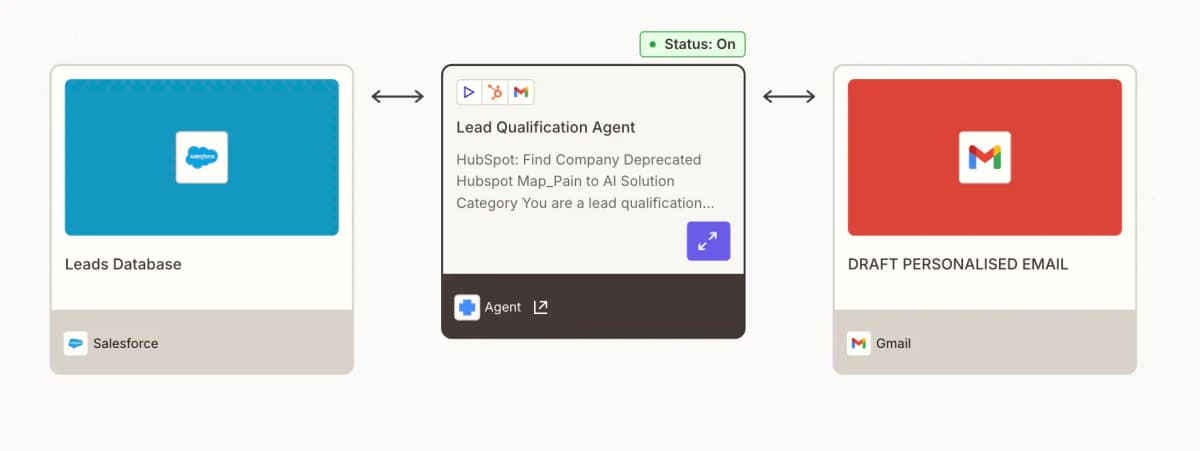
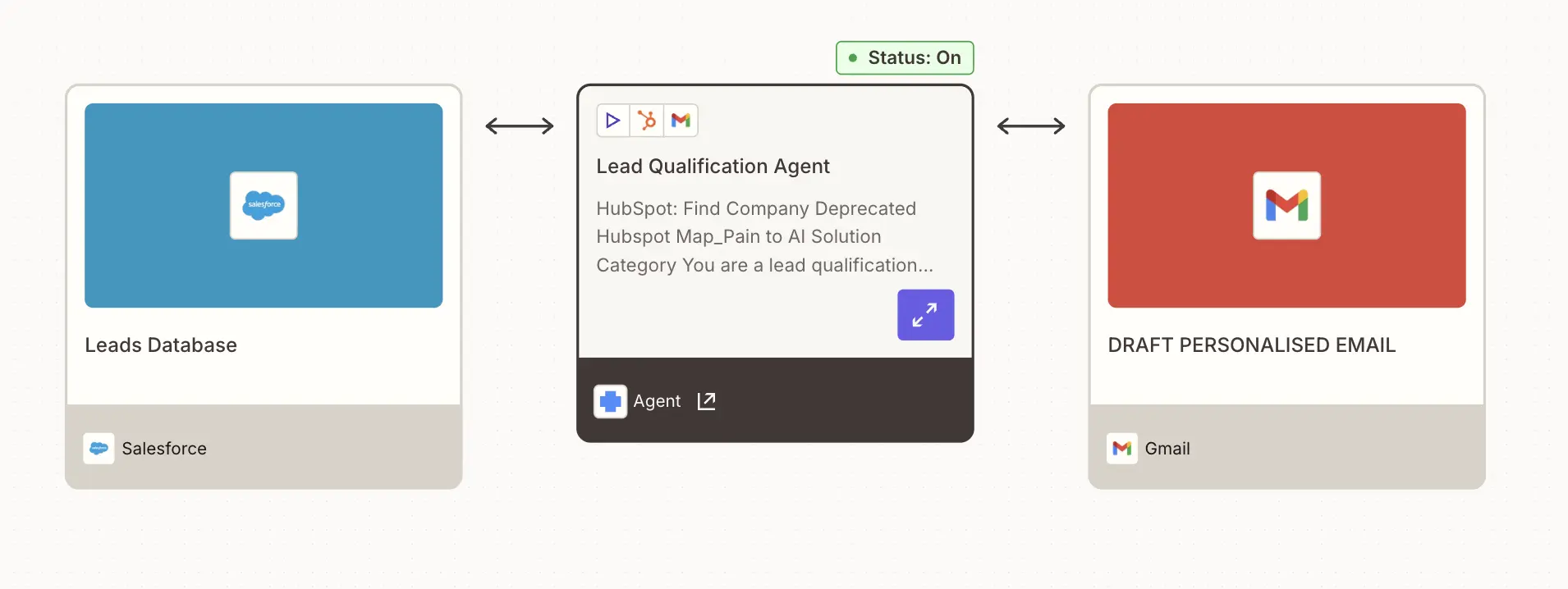
AI Agent: The agent's goal is simply to "Qualify this lead and route it to the correct team." The agent reads the company's website description. Even if the industry and country fields are blank, it can infer from the text "we produce widgets for the American automotive sector" that this is a US manufacturing lead and route it correctly. It can make a judgment call based on context, just like a human would. This is one of many practical AI use cases.
The AI blueprint: From simple rules to intelligent systems
Our 3-Day Sprint is about moving your team beyond simple, brittle, rule-based automation. We build genuine AI agents that can handle the dynamic, complex, and decision-heavy tasks that have always required a human. This allows you to automate entire workflows, not just individual tasks, unlocking a new frontier of efficiency and scale for your sales organization.
Go beyond simple automation
Ready to see what true AI agents can do for your team? Download our free AI Blueprint Checklist to explore complex workflow automation.
Download your free checklist →